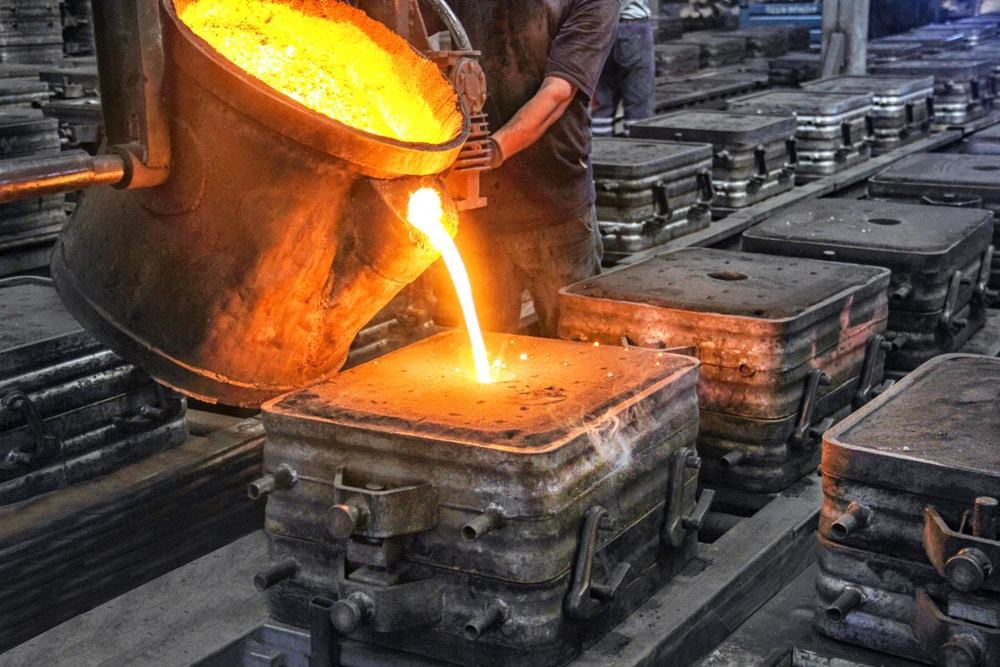
In many industries, casting is used in the manufacturing process. It is a process in which a molten metal is poured into a cavity or mold to get the desired shape. Casting lets the desired mold or cavity to solidify which can get a predefined shape. This process is used all over the world to manufacture complicated parts which cannot be manufactured by other processes. All major parts such as engine components, bed of lathe machine and milling machine bed are made by using this process. If you want to get castings, then you should get it from the best manufacturer of engineering casting who can provide you high-quality castings that are designed for engineering purposes.
Brief Note About Casting
Casting is a process of manufacturing in which a liquid material is poured into a mold containing a cavity to get the desired shape which let’s solidify the liquid material. Casting is the solidified part which is broken from the mold in order to complete the process. Casting materials are basically time-testing materials or metals that harden after the metals get blended with two or more components. For instance, the mixing of concrete, clay and plaster of Paris. Casting is a 7000-year-old process which is used in both fine art and manufacturing. The first known cast object is a copper frog that dates back to the past century. During casting, the metal gets melted and the molten metal gets transferred from a crucible into a mold which then creates a positive metal cast object. The mold and metal are cooled and then the metal object gets removed and the finished product is made.
The techniques of traditional casting include plaster mold casting, lost-wax casting, sand casting, dye casting and so on. The process of casting may be completed in a foundry studio. Engineering casting is known for many years and has been used all over the world in making tools, weapons, creating sculptures, and in the transportation process. Mostly, casting is commonly used to create complicated shapes which would be tough otherwise to make using other processes of castings. Heavy equipment such as ship propellers, machine tool beds and so on can be casted easily. Instead of having small pieces together, it will be easy to get the desired shape. Manufacturer of Engineering Castings india objective is to cast metallurgically, geometrically and dimensionally difficult components. Its objective is to give globally equivalent casting quality’ to several clients in India. Additionally, its machining competence is managing ultra-precision machining assignment on regular basis.
Steps And Types Of Castings
There are various steps of creating the castings. First, you have to create the pattern, make the mold, select the metallic alloy, melt the alloy, pour the alloy into the mold, remove the casting from the mold and then you get the finished product.
The working process of casting is the metal is melted in an appropriate furnace. Then, molten metal is poured into the predefined cavity. The molten metal lets it solidify at a suitable cooking rate. Then, the casted part is removed and cleaned for further processes such as surface finishing, machining and polishing.
There are different types of castings such as die casting, investment casting, sand casting, gravity die casting, centrifugal casting, vacuum die casting, lost foam casting, squeezing die casting and continual casting.
Benefits Of Casting
- Casting can make any complicated structures in an economic way.
- There is high compressive strength in the casting objects.
- The size of the casting object does not matter for casting.
- Any materials can be casted.
- All structures made by castings have a variety of properties.
- Create a perfect object with the help of castings.
- As compared to all manufacturing processes, casting is the cheapest of all.
- With the help of castings, you can create isotopic structures.
- Make composite components by using castings.
Get in touch with the top-rated manufacturer of engineering castings to make the complex parts without any hassle.