
The PID technology has introduced many incredible things that many industries are already taking advantage of. Of all the creations, PID autotune is one of the greatest and wildly popular.
Now, What Is PID Autotune?
PID autotune is an advanced method for tuning propulsion subsystems in KSP. The process uses the game’s integrated graphical terminal to display the results of each tune. It works by using a series of minor throttle adjustments between two extremes (e.g., min/max throttle).
The process determines its effect on the PID controller output, allowing the game to find the best possible settings for your vessel automatically.
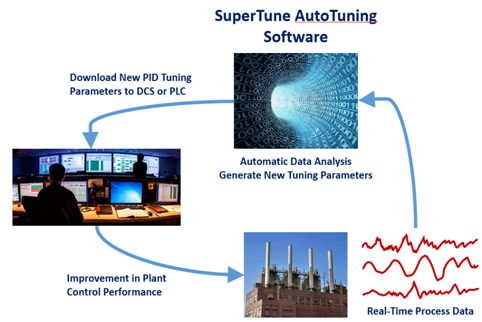
The PID autotune process begins by setting your throttle to a fixed value that is neither idle nor full- “test point.” The game will then make small, incremental adjustments to your throttle and observe how the PID controller output changes in response. The process then records the PID controller output when your test point reaches its maximum and minimum values and displays these in the PID-Autotune window. (Credit Information: https://www.picontrolsolutions.com/blog/pid-controller-auto-tuning-methods-2)
How Does PID Autotune Work?
The PID autotune window displays two graphs: one showing how the PID output changes with the throttle, and another which shows how Kp, Ki, and Kd change with the throttle. These graphs can help understand how the PID controller responds to changes in throttle and can help fine-tune your PID settings.
Now, remember, once you’ve finished using autotune, it’s essential to reset your throttle to the test point value before take-off. Otherwise, the game may not be able to determine your PID settings accurately.
There you have it: a brief overview of PID autotune and what it can do for you.
How PID Autotune Applies to Electronics?
Hello, electronic enthusiasts! Most of the readers here are familiar with PID control loops. But both beginners and experts can become lost when it comes to how these control loops apply in electronics.
To clear up this confusion, this article will touch on points such as PID loop, why do we need it, PID controller, autotune, etc.
PID Autotune Services
PID autotune is a service that tunes PID loops automatically. It does this by adjusting the PID controller’s gains until the integral, and derivative terms are minimized. The process performs with a computer algorithm, but you can also operate it manually.
The PID algorithm was initially created for use in control systems where the environment is inaccessible to humans or highly dangerous. For example, users can use a PID feedback system to maintain the temperature of a reactor in a nuclear power plant.
However, PID loops are now used in all sorts of control systems, including those without any analog feedback paths. That’s why they are popular.
What Do PID Stands For?
PID controllers minimize the integral and derivative terms.
The three terms in the PID acronym stand for “proportional,” “integral,” and “derivative.” The proportional term is simply the error multiplied by the gain. The integral term sums all the errors over time and divides them by the time constant. The derivative term is the error multiplied by the rate of change of the error.
The PID Controller
A PID controller is a circuit or software module that implements the PID algorithm. It has three inputs: error, setpoint, and feedback. The controller calculates the PID control signal by reading in the error, setpoint, and feedback signals and multiplying them with their PID gains.
It then sends this PID control signal to the PID loop’s output, which it is controlling. The autotuner usually modifies what inputs it reads from and writes to. But this depends on how one implements the PID autotuner. Some PID autotuners only modify the PID controller’s gains, while others may also modify the PID controller’s constants.
PID Autotune
As we’ve seen, control systems use PID controllers. This is because PID loops are important in any control system, and you can implement PID loops digitally.
PID autotune is a service that tunes PID loops for electronics. The autotune does this by modifying the PID algorithm’s gains until you minimize the integral and derivative terms. The process usually requires a computer algorithm to tune PID controllers precisely.
How To Autotune A PID Loop In Your Circuit?
Now that you know what PID autotune is let’s see how to do it in your circuit.
There are many ways to autotune PID loops, but we’ll look at one method here. This method uses the PID autotuner’s PID gains to tune PID loops. Since PID autotune usually requires a computer algorithm, you’ll need access to one for this method.
To use PID autotuning services in your circuit, you must first connect the PID controller’s control signal output to the PID loop’s input. You can then modify what inputs the PID controller reads from and writes to. Next, you must set the PID autotuner to “manual” mode. This will allow you to adjust the PID controller’s gains manually.
Now, you can start PID by entering the PID autotuner’s algorithm into your computer and running it. You can print out the results and once you finish the autotuning process. These results will tell you everything about the process.
Why Use PID Autotune?
For those that have never used PID Autotune, it’s practically a service that allows the systems to self-calibrate their PID controller for optimal service conditions. PID Controller is a mathematical formula that determines how much power should be delivered to the heating element of the application.
The system finds the “sweet spot” where the temperature is stable and doesn’t oscillate. The process makes this process much easier by doing it all automatically.
Overall, PID Autotune is a great solution that can help you get the best result possible. Not only does it automatically find the right PID levels, but it also helps reduce or eliminate threats.
The Bottom Line
You can then use the PID gains to adjust your PID controller’s constants and get your circuit running perfectly. PID autotune services will allow PID controllers to run more precisely in PID loops.
To sum up, we would like to tell you that PID is an essential service for anyone who wants to ensure precise control of their circuit. By minimizing the integral and derivative terms, PID auto-tuning ensures that your PID controller runs as efficiently as possible. This process is beneficial for systems with tight tolerances or deadlines.
If you want to use PID services in your circuit, you can contact PID technology service providers by conducting some research.